

Starting a business in India becomes easier when you choose a structure that is trusted by founders, investors, and financial institutions. A private limited company is one of the most preferred business structures because it gives the business a separate legal identity and limits the liability of shareholders to their shareholding.
A private limited company is suitable for startups that want better credibility, structured ownership, and future investment readiness. In India, this structure generally requires at least two directors and two shareholders, and at least one director must be a resident of India.
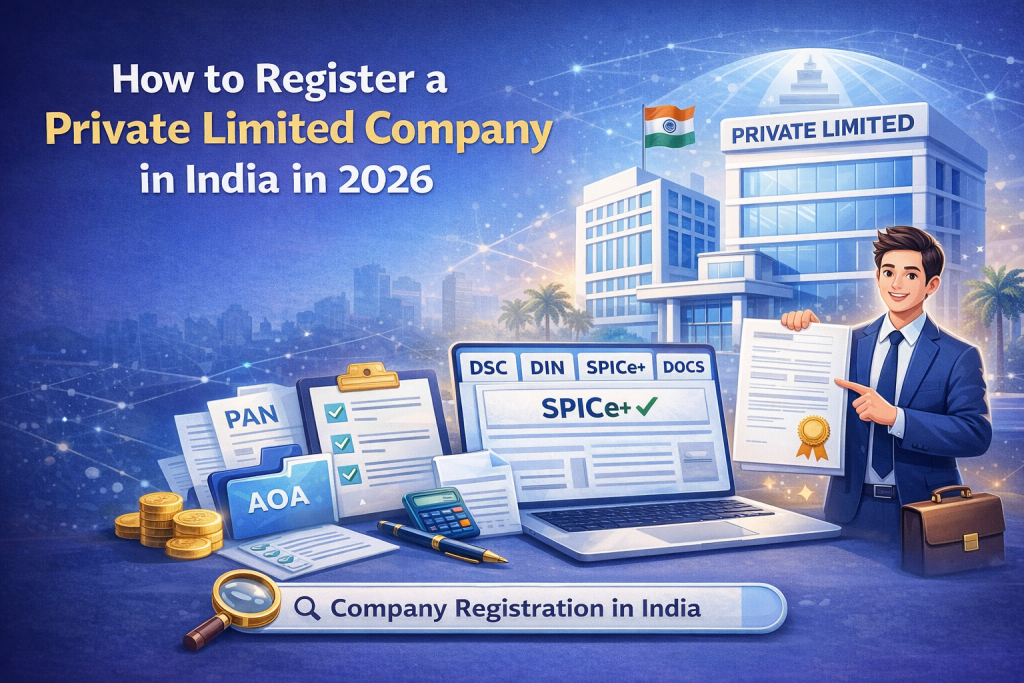
If you are planning to register a private limited company in 2026, the process is now largely digital through the Ministry of Corporate Affairs portal. The SPICe+ system is used for name reservation and incorporation, and it can also be used for linked registrations such as DIN, PAN, TAN, and certain statutory registrations.
Why founders choose this structure
One of the biggest reasons founders prefer a private limited company is limited liability protection. This means the personal assets of shareholders are generally protected from the company’s business liabilities, which is important when the business is scaling or taking commercial risk.
Another major advantage is that the company exists as a separate legal entity. It can own assets, sign contracts, open a bank account, and continue operating independent of changes in ownership or management.
Step-by-step registration process
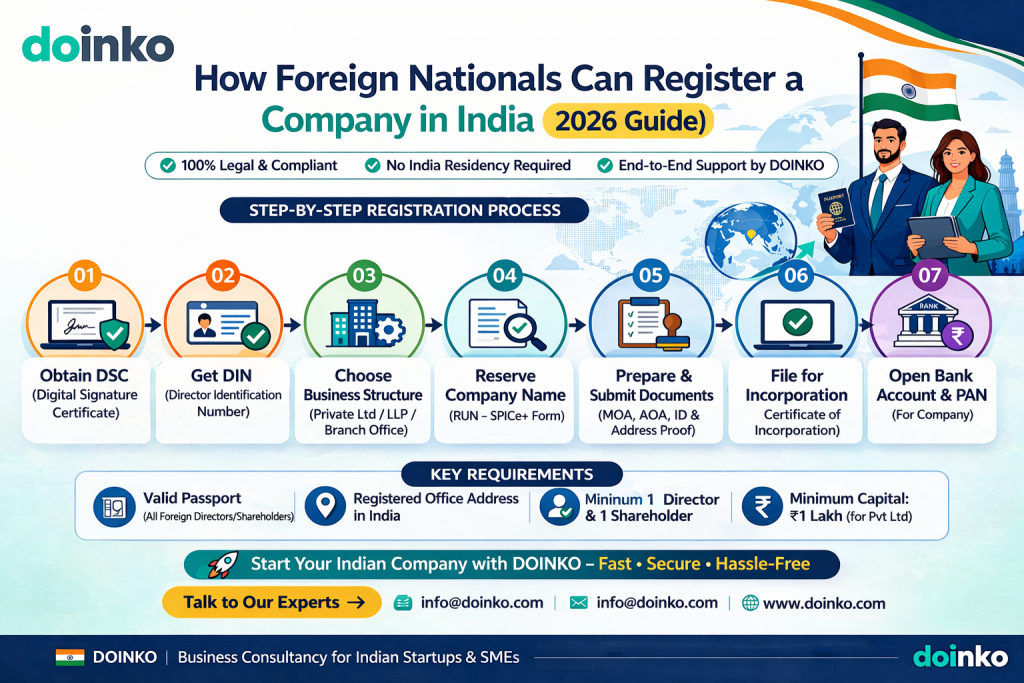
The first step is obtaining a Digital Signature Certificate, commonly called DSC, for the proposed directors and subscribers. Since the incorporation process is online, these digital signatures are used to sign incorporation documents and forms submitted on the MCA portal.
The second step is name reservation through SPICe+ Part A. Applicants can propose names aligned with their business activity, and once approved, the reserved name is typically valid for 20 days for incorporation filing.
The third step is filing SPICe+ Part B with complete company details. This includes information about directors, subscribers, capital structure, registered office address, and supporting documents required for incorporation.
The fourth step is submitting the Memorandum of Association and Articles of Association in electronic form. These documents define the company’s objectives, internal rules, and governance structure, and they must be digitally signed by subscribers and certified by a professional where required.
In many cases, the same integrated process also supports applications for PAN, TAN, and AGILE-related registrations such as GST, EPFO, ESIC, and bank account facilitation, depending on the company’s requirements.
Documents you usually need
To register a private limited company, founders should keep identity proof, address proof, and PAN details ready. For the registered office, common supporting documents include a recent utility bill, ownership proof or rent agreement, and a No Objection Certificate from the property owner where applicable.
If a director or subscriber is a foreign national, passport and overseas address proof are commonly required, and documents may need notarization or apostille based on the jurisdiction. Proper documentation reduces rejection risk and helps speed up approval.
After incorporation
Once the application is approved, the Registrar of Companies issues the Certificate of Incorporation along with the Corporate Identity Number. In many cases, PAN and TAN are also generated as part of the integrated filing process.
After incorporation, businesses should move quickly on opening a current account, maintaining statutory records, and understanding annual compliance obligations. This is where a service-led partner becomes valuable for founders who want registration support with fewer documentation errors and smoother coordination.
At Doinko, the goal is not only to help founders register a company but also to support them with the legal and operational setup needed to start properly. That matches Doinko’s wider startup support and legal-service positioning for new businesses in India.