


Many company registration applications are delayed not because the business idea is weak, but because the documentation is incomplete or inconsistent. If you want fast private limited company registration in India, the smartest first step is to prepare a clear document checklist before starting the SPICe+ filing process.
A private limited company in India generally requires at least two directors and two shareholders, with at least one resident director. Once that eligibility is clear, the next step is gathering identity, address, and registered office documents in the format expected during incorporation.
Personal documents for Indian applicants
For Indian nationals acting as directors or subscribers, PAN is one of the most important documents used in the registration process. In addition, identity and address proof may be required for individuals who do not already have a Director Identification Number.
Applicants should also keep recent address proof ready, such as a bank statement or other accepted document carrying the current address. The details across PAN, Aadhaar, bank documents, and mobile or email records should be consistent to avoid unnecessary objections during processing.
Registered office proof
The company must declare a registered office address as part of the incorporation process. This address becomes the official place for legal communication and company record maintenance.
If the office premises are rented, a rent agreement and a No Objection Certificate from the owner are commonly required. If the property is owned, ownership proof may be used along with a recent utility bill that is usually not older than two months.
Utility documents such as electricity, gas, or water bills are often used to validate the office address. Founders should ensure that the office address mentioned in the incorporation forms matches the wording in the attached proof documents.
Name approval support
If the proposed company name includes a regulated word or requires prior approval, supporting approval documents may need to be attached. Likewise, if the company name is based on a registered trademark or trademark application, supporting trademark records may be required during the name approval stage.
This makes name planning an important part of the registration process rather than a last-minute step. A well-chosen, compliant, and brand-ready name can save time at the approval stage and help build a stronger market identity later.
Foreign director documents
If one of the directors or subscribers is a foreign national, a valid passport is generally mandatory. Address proof such as a driving licence, residence card, bank statement, or government-issued identity document may also be required, depending on the applicant’s location and document availability.
Since cross-border documentation often requires notarization or apostille, it is better to prepare these documents in advance. This helps prevent delays once the incorporation file is ready for submission.
Why this matters
Accurate documentation directly affects approval speed. A streamlined filing process through SPICe+ has made company registration more efficient, but document mismatches can still slow down name approval or incorporation clearance.
For founders who want a smoother process, Doinko can position this service as guided support rather than only form filing. That approach fits well with Doinko’s legal-compliance support model and startup-focused service ecosystem.
- Wholly Owned Subsidiary vs Joint Venture: India Entry Options for Foreign Companies
 Foreign corporations planning to expand into India must select a business structure that aligns with their operational goals, risk appetite, and investment scale. The Indian government provides several legal entry routes, each with different levels of autonomy, tax implications, and regulatory scrutiny. Selecting the right entity is a critical first step for long-term commercial success….
 - How Foreign Nationals Can Register a Company in India (2026 Guide)
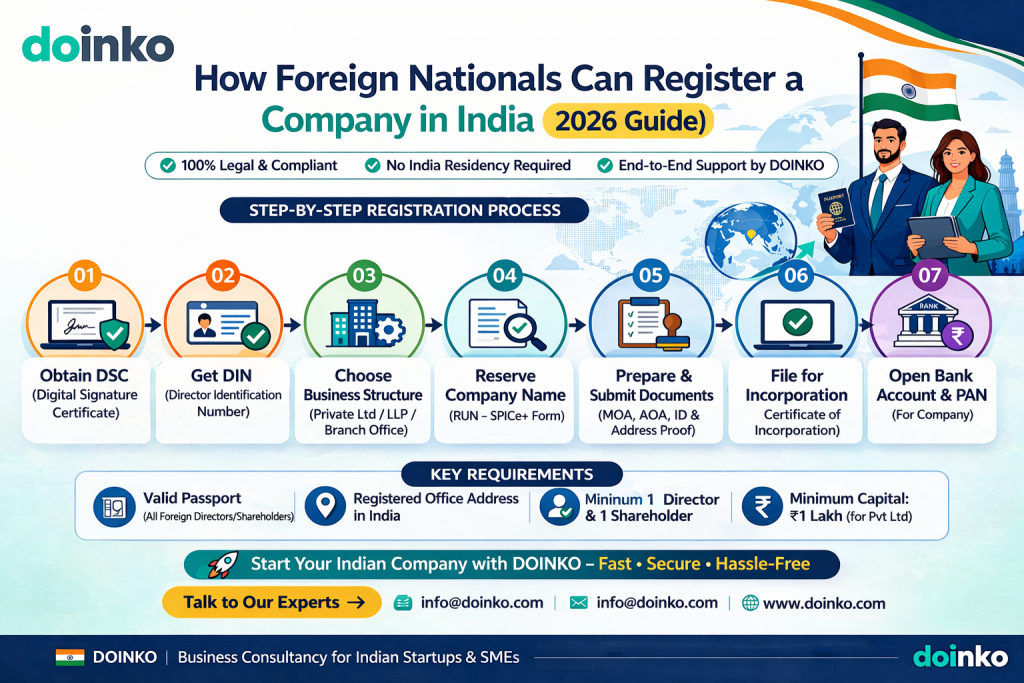 India offers a highly lucrative market for global entrepreneurs, supported by digitized corporate filing systems and liberalized trade policies. Foreign nationals and overseas corporations can easily establish a presence here by registering a Private Limited Company. This structure provides a separate legal identity, limits financial liability, and allows for seamless equity structuring. Navigating FDI Routes…
 - Private Limited Company vs LLP in India: Which Structure Is Better for Startups?
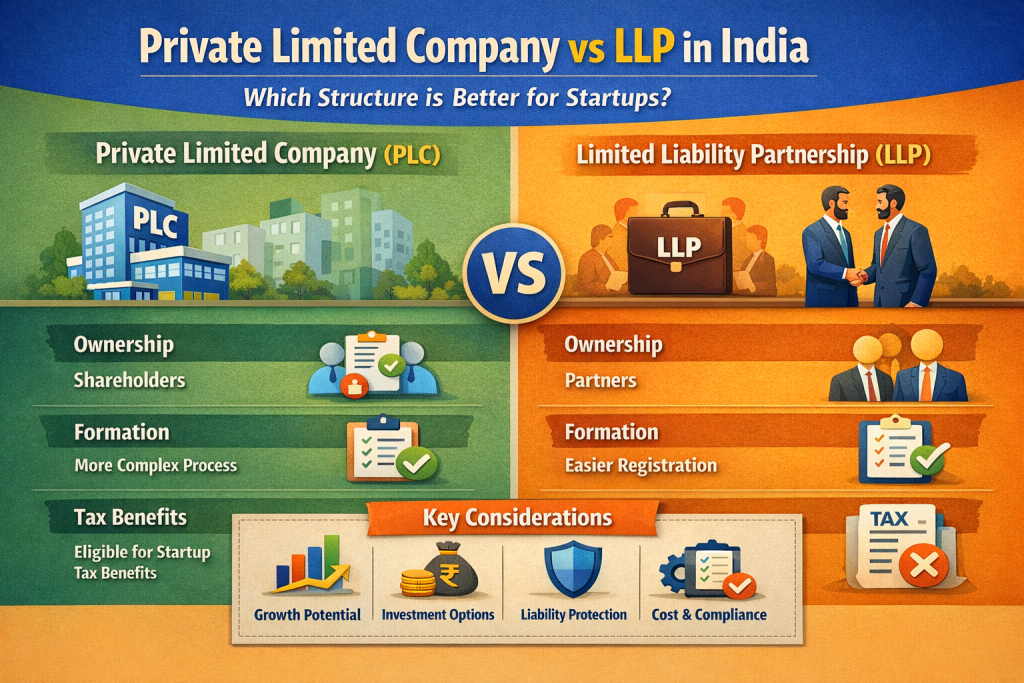 One of the first decisions every founder makes is choosing the right legal structure. For most startups in India, the comparison usually comes down to a private limited company and a limited liability partnership, or LLP. A private limited company is often preferred where founders want a clear distinction between ownership and management, easier equity…
 - Documents Required for Private Limited Company Registration in India
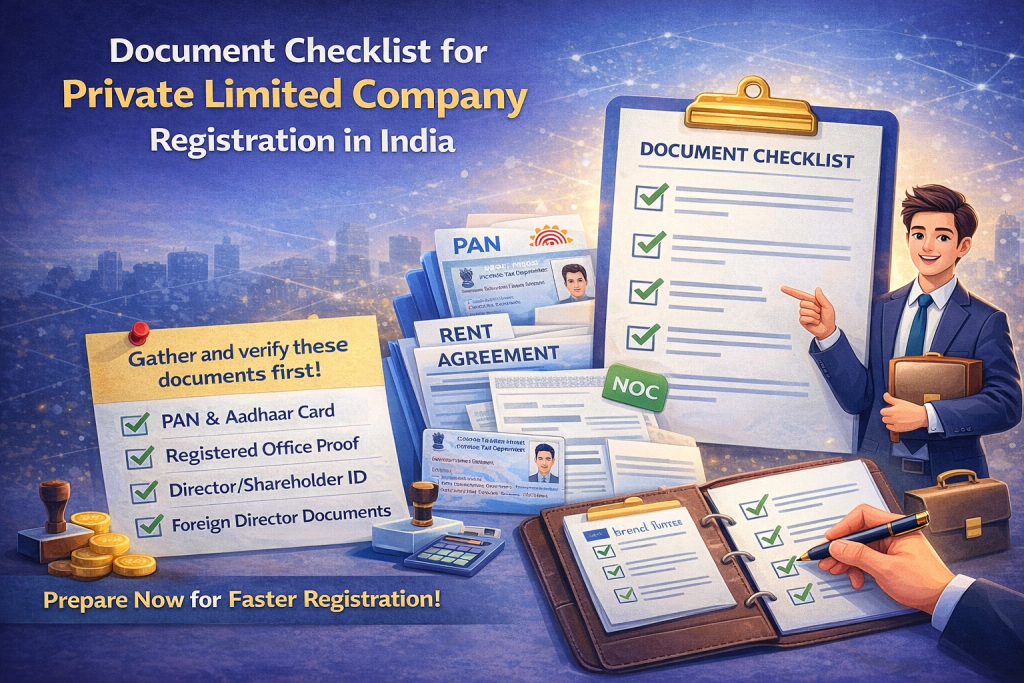 Many company registration applications are delayed not because the business idea is weak, but because the documentation is incomplete or inconsistent. If you want fast private limited company registration in India, the smartest first step is to prepare a clear document checklist before starting the SPICe+ filing process. A private limited company in India generally…
 - How to Register a Private Limited Company in India in 2026?
 Starting a business in India becomes easier when you choose a structure that is trusted by founders, investors, and financial institutions. A private limited company is one of the most preferred business structures because it gives the business a separate legal identity and limits the liability of shareholders to their shareholding. A private limited company…
